
KCSE Agriculture Paper 1 Questions And Answers
- BeyondForest

- Jun 3, 2024
- 12 min read
Updated: Dec 5

SECTION A (40 Marks)

Answer All the questions in this section in the answer Booklet provided
Question1 (1 Marks)
Give two factors that influence the quantity of water used in the farm (1 Mark)

Size of the farm / area under crops
Type of crops grown
Soil type (sandy soils need more water)

Climate / rainfall amount
Stage of crop growth
Method of irrigation
Question 2 (1.5 Marks)

Applying farmyard manure / compost / green manure
Incorporating crop residues into the soil (mulching or ploughing them in)
Growing cover crops or legumes and turning them into the soil
Question 3 (1 Marks)
Give two advantages of concrete block over Timber as building materials

More durable and long-lasting (resistant to rot, insects, and decay)
More fire-resistant and safer in construction

Stronger and more stable
Require less maintenance
Not affected by termites
Question 4 (1 Marks)
State two Characteristics of Goats that make them adaptable to arid areas of Kenya
There is a positive interaction between the better recycling rate of urea and a better digestion of such food in desert goats. The rumen plays an important role in the evolved adaptations by serving as a huge fermentation vat and water reservoir.
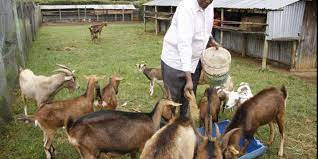
A low body mass, and low metabolic requirements of goats can be regarded as an important asset to them for it minimize their maintenance and water requirements, in areas where water sources are widely distributed and food sources are limited by their quantity and quality.
They can feed on a wide range of vegetation, including shrubs and browse.
High browsing ability on sparse vegetation
Efficient water utilization
Ability to walk long distances in search of feed
They tolerate heat and water scarcity better than most livestock.
The rumen, the salivary glands and the kidney coordinately function in the regulation of water intake and water distribution following acute dehydration and rapid rehydration
Question 5 (2 Marks)
List Four Factors that Influence the supply of Casual Labor in a Farm

Wage Rate Offered – Higher wages attract more casual workers, while low wages reduce labor supply.
Availability of Alternative Employment – If other jobs are available nearby, fewer people will offer casual labor on the farm.
Seasonal Factors – During peak farming seasons (planting/harvesting), more labor is needed and more workers are available.
Population Size and Skill Level in the Area – Areas with larger populations or many skilled farm workers provide more casual labor.
Question 6 (3 Marks)

Diversifying enterprises – growing different crops or keeping different livestock to spread risk.
Insurance – taking crop or livestock insurance to protect against losses.
Irrigation / water harvesting – to reduce dependence on unreliable rainfall.
Contract farming – securing markets in advance to avoid price fluctuations.
Keeping farm records – to help plan better and predict trends.
Adopting modern technologies – using improved seeds, fertilizers, and pest control to reduce production risks.
Question 7 (1Marks)
State two methods of controlling Stalk borers
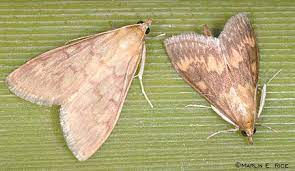
Cultural Control – Destroying crop residues after harvest, early planting, and crop rotation to break the pest’s life cycle.
Chemical Control – Applying recommended insecticides (e.g., carbaryl, cypermethrin) at the funnel of maize plants to kill larvae.

Natural Method of Controlling Stalk Borers (Simplified) Make a natural mixture using 2 kg of ash, 50 g of dried ground pepper .Mix them well and put a pinch into the funnel (whorl) of each maize plant. The strong smell and irritation from pepper + the dryness of ash repels or kills young stalk borer larvae before they enter the stem.
Question 8 (2 Marks)
State four precautions that would ensure safety of the farmer while spraying chemicals in crops

Wear protective clothing (gloves, mask, goggles, boots, long sleeves).
Avoid spraying against the wind to prevent inhaling chemicals.

Do not eat, drink, or smoke while spraying.

Wash hands and body thoroughly after spraying and change clothes.
Question 9 (2 Marks)
Give four Natural factors that encourage soil erosion

Heavy rainfall – strong raindrops loosen and wash away soil.
Steep slopes – gravity makes soil move downhill easily.

Strong winds – blow away loose, dry topsoil.
Lack of vegetation cover – no roots to hold the soil together.
Question 10 (1.5 Marks)
State Three farming activities which may cause pollution to water sources

Using excess fertilizers and chemicals that get washed into rivers and streams.
Improper disposal of animal waste/manure which contaminates water

Soil erosion from farms which carries sediments into water bodies.
Question 11 (1.5 Marks)
Give Three ways used to Improve production of indigenous cattle

Selective breeding – choosing superior bulls and cows to improve traits.
Better feeding – providing adequate pasture, fodder, and supplements.

Improved disease control – regular vaccination, deworming, and proper housing.
Question 12 (3 Marks)
State six management practices in fish rearing

Regular feeding with the right type and amount of fish feed.
Maintaining proper water quality (clean water, correct pH, oxygen levels).

Controlling predators and pests around the ponds.
Stocking fish at the correct density to avoid overcrowding.
Regularly checking fish health and removing sick or dead fish.
Removing excess weeds and maintaining pond cleanliness.
Question 13 (2 Marks)
Give four measures that can control egg eating by hens in a deep litter system

Provide enough nesting boxes to reduce crowding and broken eggs.
Collect eggs frequently to prevent hens from discovering and eating them.

Provide adequate calcium in the diet (e.g., layers mash, oyster shell) to prevent soft-shelled eggs.
Keep the nesting area dim and clean to discourage hens from pecking eggs.
Break the habit by removing culprit hens
Provide distractions (e.g., greens) to reduce boredom
Ensure nests have enough litter to cushion eggs
Question 14 (2 Marks)
State four factors that are considered when formulating a livestock ration

Age of the animal
Physiological state (e.g., pregnant, lactating, growing)
Purpose of keeping the animal (e.g., meat, milk, work)
Nutrient requirements / balance of nutrients (energy, protein, vitamins, minerals)

Availability and cost of feed ingredients
Question 15 (1 Marks)
Give Two signs that would indicate that a cow has died of anthrax

Failure of blood to clot — blood oozes from body openings (nose, mouth, anus).

Rapid bloating
Swollen lymph nodes
Sudden death without prior signs of illness.
Question 16 (1 Marks)
Name two methods which can be used to detect nutrient deficiency in a crop field

Soil testing / soil analysis

Plant tissue analysis / leaf analysis
Question 17 (1 Marks)
Give two reasons why maize should be harvested at milk stage for making silage

It has high moisture content, which promotes good compaction and fermentation.

It has high nutrient value, especially sugars that support proper silage fermentation.
Question 18 (1Marks)
State two causes of hard pan in a crop field
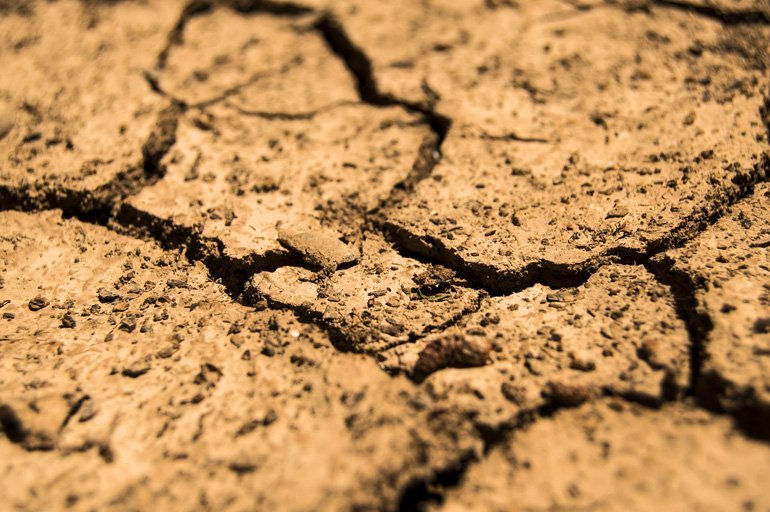
Continuous ploughing at the same depth

Use of heavy machinery that compacts the soil
Question 19 (1.5 Marks)
State Three methods of breaking dormancy in some crops before planting

Scarification (scratching or weakening the seed coat)
Soaking seeds in water (softens seed coat and activates germination)

Cold treatment / stratification
Question 20 (3 Marks)
State 6 disadvantages of weeds in crop production

Compete with crops for nutrients
Compete for water
Compete for sunlight

Harbor pests and diseases
Interfere with harvesting operations
Reduce crop yield and quality
Increase cost of production due to weeding
Some weeds are poisonous to livestock
Question 21 (3 Marks)
List two tools used for each of the following farm operations
Tightening barbed wires during fencing (1 Marks)
Pliers

Wire tensioner
Smoothening concrete floors during plastering (1Marks)
Wooden float
Finishing trowel

22.)State six reasons why agriculture is important in Kenya's economy (3 Marks)

Provides employment to a large percentage of the population
Contributes to national income (GDP)
Provides raw materials for agro-based industries

Earns foreign exchange through exports (tea, coffee, flowers, etc.)
Promotes transport and trade
Provides market for industrial goods
Ensures food security for the nation
Improves rural development and raises living standards
23.)State four reasons for keeping health records in Livestock production (2 Marks)
To plan and schedule vaccinations, deworming, and other health programs
To identify animals with recurring health problems for culling or special management

To monitor the health status of animals over time
To help in diagnosis and treatment by providing past disease history
SECTION B (40 Marks)

Answer ALL the questions in this section in the answer booklet provided
Question 24
a)Name the causal organism for brucellosis in cows (1Marks)
Brucella abortus
b.)Give two symptoms of brucellosis in cows (2 Marks)
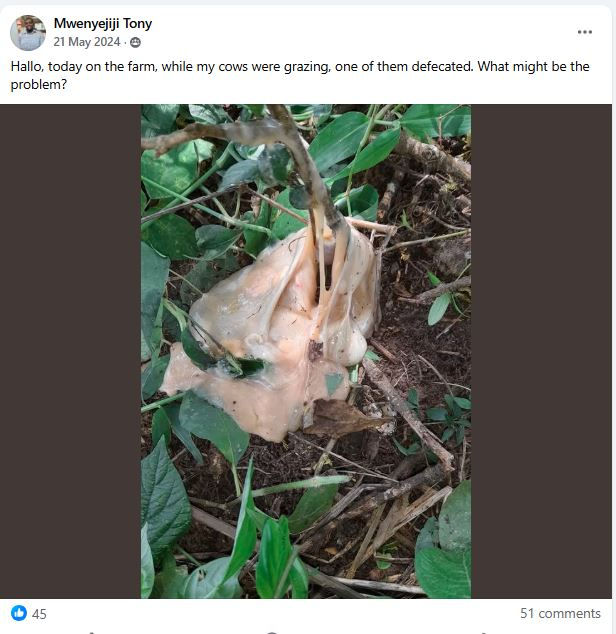
Abortion, usually in the last trimester of pregnancy.
Retained placenta after abortion.
c.)State four measures that should be taken to control brucellosis in cows (4 Marks)
Vaccinate heifer calves with the recommended brucellosis vaccine.
Test and cull infected animals to prevent spread.
Practice strict hygiene when handling aborted fetuses, placentas, and fluids.
Isolate affected animals to stop transmission.
Question 25

a.)What is steaming up in dairy cattle management ? (1Marks)
Steaming up is the practice of gradually increasing the amount of concentrates fed to a pregnant cow during the last 6–8 weeks before calving.
b.)Give two reasons for steaming up in dairy cattle management(2 Marks)
To boost the cow’s body condition in preparation for calving and early lactation.
To stimulate high milk production after calving by building energy reserves and preparing the udder tissues.
c.)State Three factors that influence the amount of concentrates fed to a lactating cow (3 Marks)
Level of milk production — high-producing cows need more concentrates.
Quality and quantity of roughage available — poor roughage requires supplementing with more concentrates.
Stage of lactation — peak lactation requires higher concentrate intake.
Question 26

a.)Give Three Characteristics of Nitrogenous Fertilizers (3Marks)
They are highly soluble in water and easily available for plant uptake.
They promote vegetative (leafy) growth in crops.
They are volatile and can be lost through leaching or denitrification.
b.)State Three functions of Nitrogen in crops (3 Marks)
Promotes vigorous vegetative growth and development of leaves.
Forms part of proteins and chlorophyll, essential for photosynthesis.
Increases crop yield by enhancing overall plant growth.
Yellowing (chlorosis) of older leaves, starting from the tips.
Stunted growth and thin, weak plants.
Question 27

a.)What is Crop Rotation (1Marks)
Crop rotation is the practice of growing different crops on the same piece of land in a planned sequence over several seasons or years.
b.)State Three Advantages of Crop Rotation (3 Marks)
Helps control pests and diseases by breaking their life cycles.
Improves soil fertility when legumes are included, as they fix nitrogen.
Reduces soil exhaustion by alternating crops with different nutrient demands.
c.)State Three Factors that should be considered when designing a crop rotation (3 Marks)
Nutrient requirements of crops (alternate heavy feeders with light feeders).
Susceptibility of crops to pests and diseases (avoid planting related crops consecutively).
Market demand/economic value of crops to ensure profitability.
Question 28

(i)Cash account
A cash account is a record that shows all cash received and all cash paid out in the farm during a given period.
(ii)Ledger
A ledger is the principal book of accounts where all individual accounts (e.g., sales, purchases, expenses, assets) are kept and balanced.
(iii)Balance Sheet
A balance sheet is a financial statement that shows the farm’s assets, liabilities and owner’s equity at a specific date. It shows the financial position of the farm.
(iv)Purchase Order
A purchase order is a document issued by a buyer to a supplier requesting delivery of goods or services at agreed prices and conditions.
b.)Name two types of inventories used in farm accounts(2Marks)
Consumable inventory
(e.g., feeds, seeds, fertilizer, fuel)
Capital inventory
(e.g., machinery, buildings, livestock, equipment)
Question 29

a.)State one method of increasing ploughing depth when using a disc plough (1Mark)
Adjusting the top link to allow deeper penetration.
b.)State two reasons for maintaining a disc plough (2Marks)
To reduce wear and tear and prolong the lifespan of the plough.
To reduce breakdowns and repair costs
To ensure efficient and effective ploughing performance.
c.)State three advantages of farm mechanization (3Marks)
Increases speed and efficiency of farm operations.
Reduces labor requirements and costs.
Improves the quality and uniformity of work

SECTION C(40 Marks)
Answer any TWO questions from this section in the answer booklet provided
Question 30
Describe field production of either sugar cane or Tea under the following sub-headings

a.)Ecological requirements (4 Marks)
Climate: Requires warm temperatures of 20–30°C for good growth.
Rainfall: Needs 1,200–1,800 mm of well-distributed rainfall annually or irrigation in dry areas.
Altitude: Grows well from sea level to about 1600 m above sea level.
Soils: Prefers deep, well-drained, fertile loamy soils with high organic matter and pH of 5.5–7.0.
b.)Seedbed preparation (5 Marks)
Clear the land by removing bushes, stumps and burning trash if needed.
Primary cultivation using a disc plough or mouldboard plough to a depth of 20–25 cm.
Secondary cultivation using harrows or rotavators to break clods and level the soil.
Establish ridges or furrows at spacing of 1–1.5 m depending on variety and region.
Incorporate manure/fertilizer during final preparation to improve soil fertility.
c.)Planting of Sugarcane or Transplanting of Tea (3 Marks)
Use healthy cane setts (cuttings) with 2–3 buds each from disease-free mother cane.
Place setts in furrows horizontally, buds facing sideways/upwards, and cover lightly with soil.
Apply fertilizer (e.g., DAP or phosphate) at planting and ensure proper moisture for sprouting.
d.)Disease Control (3 Marks)
Use disease-free planting materials and resistant varieties.
Rogue and burn infected plants to prevent spread of diseases such as smut, mosaic and red rot.
Apply appropriate fungicides or hot-water treatment to setts before planting where necessary.
e.)Harvesting ( 4 Marks)
Harvest cane at 18–24 months, when sugar content is highest (maturity).
Cut stalks close to the ground to capture the high-sucrose basal portion.
Remove leaves and tops, and transport cane quickly to prevent sucrose loss.
Use manual or mechanical harvesting depending on farm size and resources.
Question 31
Describe the management of Dairy calf using artificial rearing method from birth to weaning (20Marks)
Artificial rearing involves feeding the calf on milk or milk replacers without suckling the dam. Proper management ensures healthy growth, disease prevention, and good future milk production.
1. Immediately After Birth (2 marks)
Ensure the calf breathes by clearing mucus and stimulating breathing.
Disinfect the navel with tincture of iodine to prevent infection.
Dry the calf using a clean towel to maintain body temperature.
2. Feeding Colostrum (3 marks)
Feed colostrum within the first 30 minutes to 2 hours after birth.
Provide colostrum equivalent to 10% of body weight within the first 24 hours.
Colostrum supplies antibodies, energy, vitamins and acts as a laxative.
3. Housing (2 marks)
House calf in a clean, dry, well-ventilated pen or calf hutch.
Provide warm bedding such as straw or wood shavings.
Pen should allow isolation to reduce disease spread.
4. Milk Feeding Routine (3 marks)
Feed whole milk or milk replacer at 10% of calf’s body weight per day, divided into 2–3 meals.
Use clean buckets or teats for feeding.
Maintain milk at 37–40°C (body temperature).
Reduce milk gradually as weaning approaches.
5. Hygiene and Sanitation (2 marks)
Clean feeding equipment after every meal using hot water and disinfectant.
Remove manure daily and keep bedding dry.
Disinfect the calf pen regularly to prevent scours and pneumonia.

6.Introduction of Calf Starter (2 marks)
Introduce high-quality calf starter feed at 1 week of age.
Ensure it is palatable, fresh, and high in energy and protein.
Starter encourages rumen development.
7. Provision of Clean Water (1 mark)
Provide clean fresh water daily from 1 week old to aid digestion and rumen growth.
8. Introduction of Roughage (1 mark)
Offer small amounts of soft, leafy hay from 3–4 weeks old.
Roughage improves rumen function and chewing activity.
9. Health Management (3 marks)
Follow a vaccination schedule as recommended by a veterinarian.
Deworm calves regularly starting at 4–6 weeks of age.
Observe calves for signs of illness such as scours, coughing, or reduced appetite and treat promptly.
Practice tick control and maintain good sanitation to reduce disease incidence.
10. Weaning (1–2 marks)
Wean the calf when it consumes 1–1.5 kg of calf starter daily for three consecutive days.
Typically done at 6–8 weeks depending on growth and health.
Reduce milk gradually to avoid stress and digestive issues.
Move the calf to a larger group pen with others of similar age.
Continue feeding calf starter and gradually transition to grower feed.
Question 32

To confine livestock within the farm and prevent them from straying.
To protect crops from damage by livestock and wild animals.
To mark farm boundaries clearly and prevent land disputes.
To control grazing by dividing pasture into paddocks for rotational grazing.
To enhance security by preventing entry of thieves, trespassers, and predators.
To guide movement of animals to desired areas (e.g., dipping, milking, water points).
To separate different enterprises such as crop fields, farm buildings, and livestock units.
To isolate sick animals and prevent the spread of diseases.
To protect young or delicate crops from destruction.
To improve the general organization and appearance of the farm.
b.)What factors should be considered when siting farm structures (10 Marks)
Topography of the land
Structures should be located on well-drained, gently sloping or flat areas to avoid flooding.
Proximity to water sources
Should be close to clean and reliable water for animals, irrigation, and domestic use.
Accessibility
Easy access to roads, markets, farm operations, and transport routes.
Prevailing winds
Structures like poultry houses and latrines should be placed downwind from residential or sensitive areas to reduce odors and disease spread.
Soil type and stability
Strong, stable soils are ideal for foundations; avoid loose, swampy, or rocky soil.
Drainage
Choose areas with good natural drainage to prevent waterlogging and structural damage.
Security
Structures should be located where they are visible and easy to protect from theft and predators.
Proximity to related enterprises
Example: Milking parlors close to dairy sheds, stores close to livestock housing, etc., to reduce labor and movement.
Future expansion
Space should allow for future growth of enterprises, additional buildings, or new systems.
Environmental considerations
Avoid wetlands, riverbanks, steep slopes, and protected areas; comply with environmental regulations.


Comments